One of the many reasons I went into design is that I really enjoy working with others. Finding someone to work with in a collaborative partnership elevates the ideas and the outcomes.
Collaborators to date include master glass artist, Louis Thompson and textile designer, Ella Doran.
Broken Ocean and the Seven Stages of Degradation with Louis Thompson.
Louis and I started working together in 2016 on what has turned out to be a long term exploration that brings together my collection of ocean plastic pollution picked up from Kamilo beach in Hawaii, waste glass from the hot shop floor and narratives around our oceans and the growing plastic waste problem.
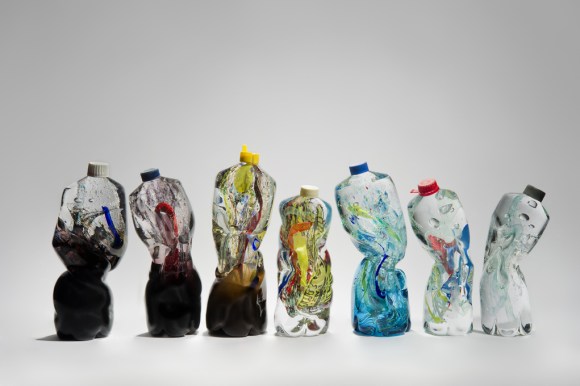
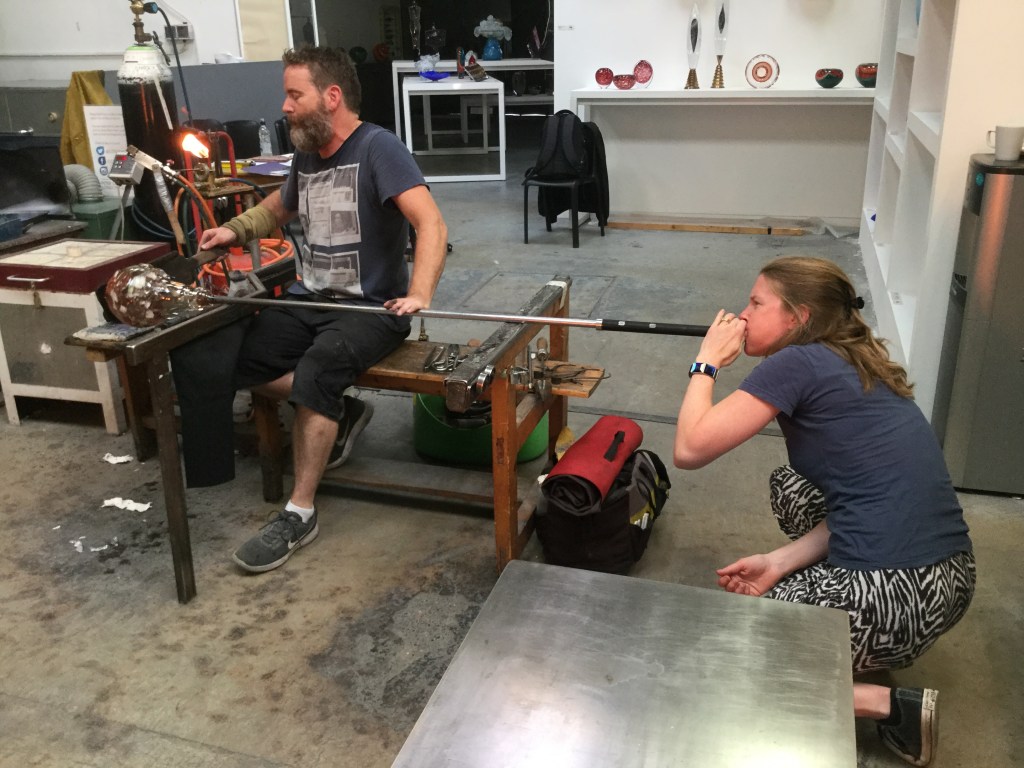
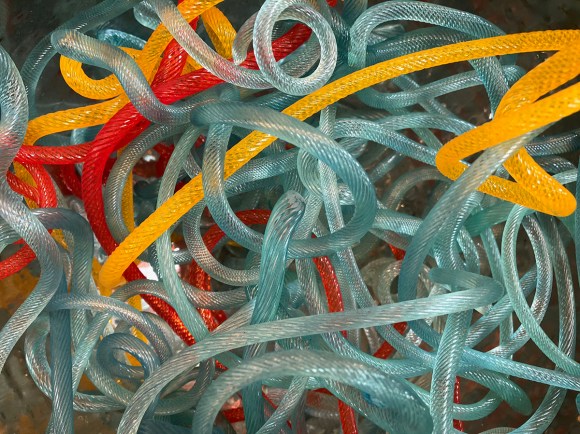
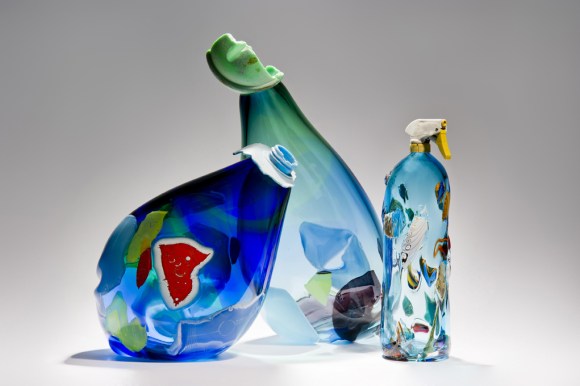
There are many blog entries on the development and making of our collaboration together, take a look under the ‘glass work’ category and ‘drawing’.
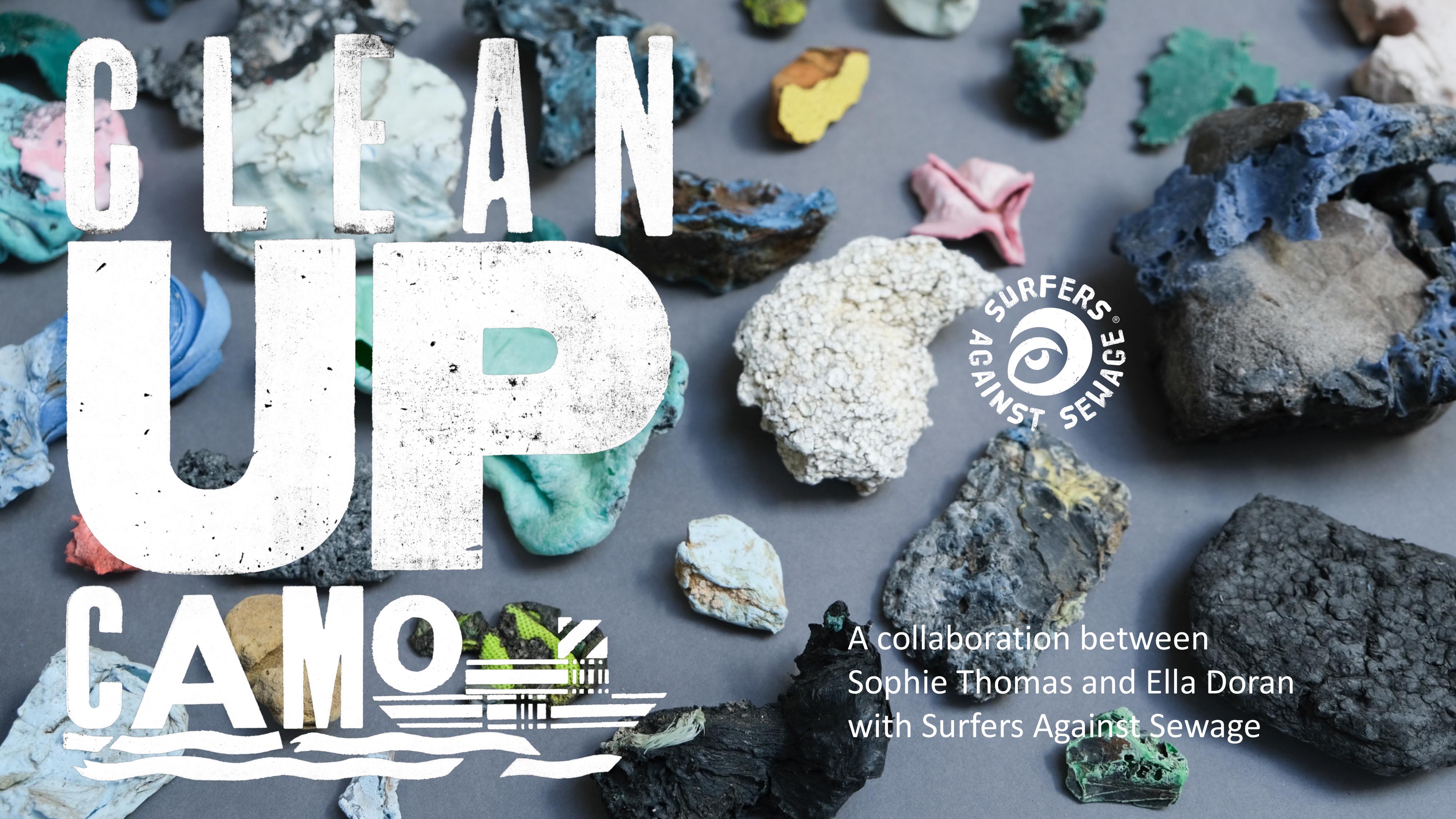
Clean Up Camo
A textile collaboration project with Ella Doran.
Our aim was to create a textile product series that not only told a story of plastic pollution within the pattern but also pushed us produce the most sustainable and circular we could. We used our experience, network and technical understanding to scrutinise our supply chains, dig out new materials and question waste assumptions.
We have designed this product range by researching materials and methods of production that would give us the most beautiful outcomes with the smallest of environmental footprint.
It is the result of multiple deep dives into our material supplies. We asked ourselves many, many questions; where did it come from? What was it made with? How was it made? What would happen to it after its useful life had come to an end? How much water is used? Where does the waste go? The answers we got back helped defined the products we designed.
We set our goals. Our bottom line would be that our product range would be made from one material known as ‘mono-material’. This meant every thread, zip, textile and filling had to be made from one material. Where possible we would go post-consumer, minimum carbon and as close to circular as possible.
We crunch the carbon data which, in turn informed our design decisions. Some things we thought would have big impact made little difference and visa-versa.
It was important that this wasn’t just a set of lovely products, there was a story behind Clean Up Camo. We want to live in a world where no plastic ends up in our oceans and none of our work is responsible for waste, because waste is a design flaw. With every piece sold from this collection 10% of the sales goes to Surfers Against Sewage (SAS) to help the fight against pollution in our oceans. We have also worked to create three new T shirt designs for SAS through our Clean Up Camo X Teemills collab. You can see and order them here (link).

Here are our principles in more detail:
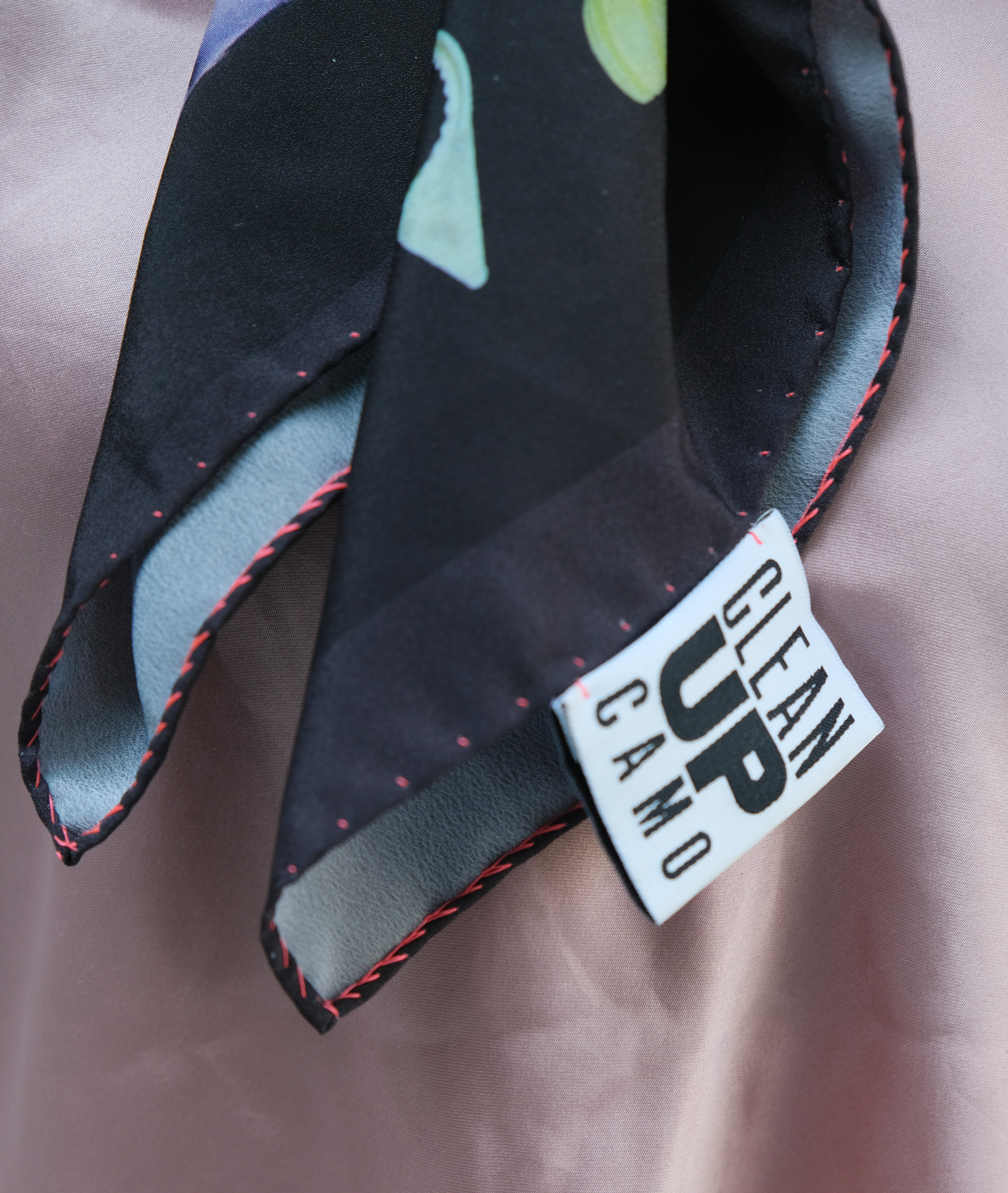
Minimum parts in mono materials. Each zip, liner, thread, textile, filler and label has been optimised and aligned to be the same material together. This is important because it means that at the end of the use life when you have had enough or it’s been used so much there is no more repair to be done we can take it back and put it into a polyester recycling stream.
Ocean plastic in the pattern and in the material. Our velvet and linen fabrics are made from post-consumer plastic, re-spun into polyester. Our zips are made from waste plastic, our filling post-consumer plastic too.
Where we could not source a post-consumer material, we made sure all were mono-material – no poly cotton or mixed fibres.
Minimum water use. Our material choice was also influenced by the water footprint in the material and the printing. The textile industry is notorious for its water polluting processes. Using Polyester allowed us to print using dye-sublimation processes that has minimum water usage.
And we chose not to create a cotton product (though we did do some lovely tea towel designs!).
Waste not want not. Waste was considered at every stage of the design and process. Minimum fabric was ordered, our suppliers worked to get the most out of the rolls, very little was wasted. We even grappled with the packaging. We got the printers to send us the leftover paper from the dye-sublimation process and we created bespoke packaging from it. The labels (and string) are paper, pre-existing and rubber stamped. These can be recycled too.
Designed through the lens of minimum carbon.. We tracked our suppliers, ordered as close as we could to the UK to minimise transportation and printed and made the products in the UK. We badgered suppliers for data about where the fabrics, inks, thread, packing, print paper comes from. Some of it we just couldn’t get and as with all carbon footprinting we went with a global average. Then we ran the numbers and compared it to ‘business as usual’.
What comes around goes around. When we looked at the carbon data it was clear to see that making a product circular, i.e getting the material back into the system as a useful material again is so important. So, after years of wearing it, sitting on it or stuffing pens/make up/bits and bobs in it and when you feel like a change send it back to us. We know exactly what is in it (one material) and know who wants to recover it. It’s as close to a circular product range as we can make it right now.
One last thought, we really hope you love Clean Up Camo and can see the care and attention we have put in to make it as impact light as is currently possible. To make sure your actions don’t add the kgs please look after them too by keeping washing to a minimum and avoid dry cleaning (full of nasty solvents).
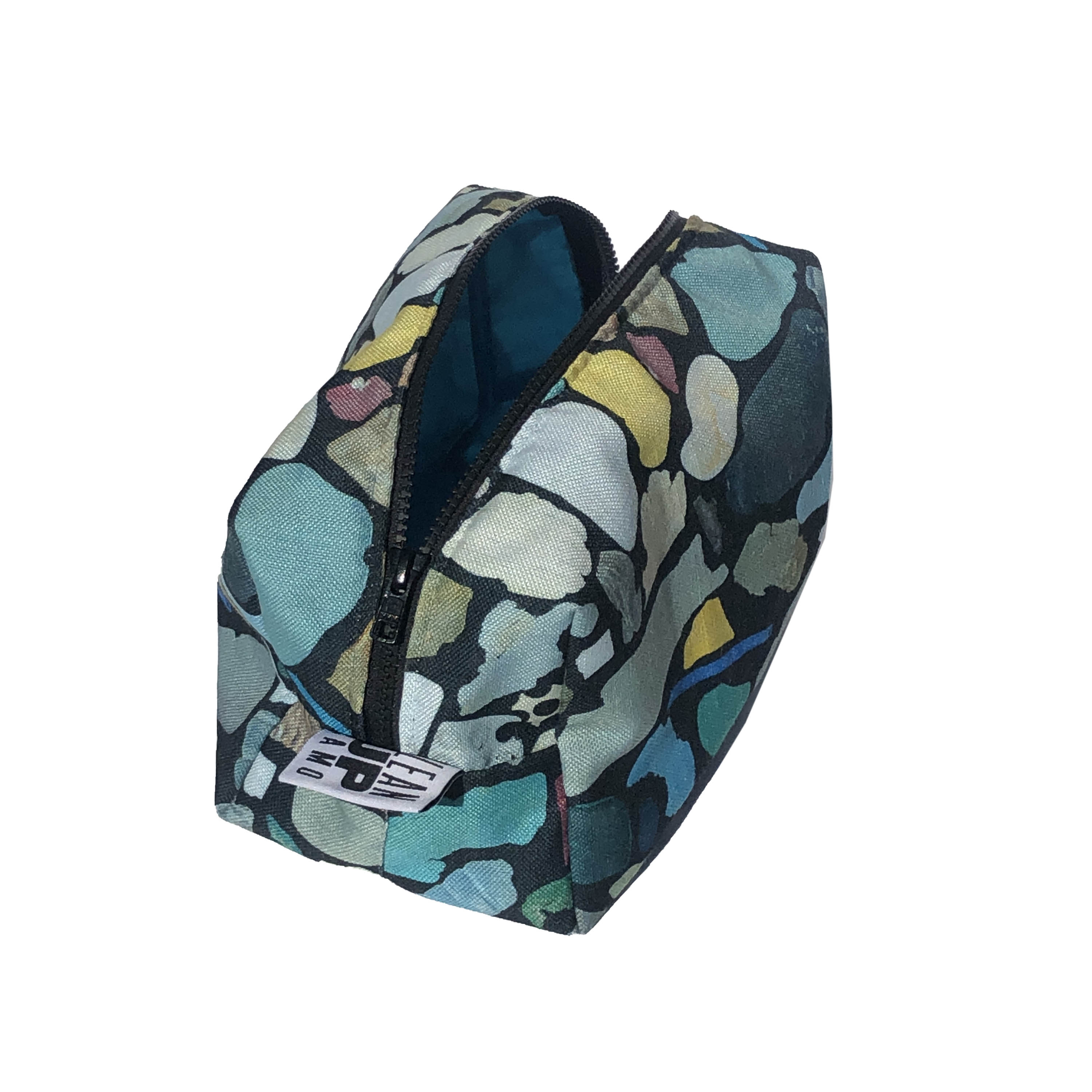
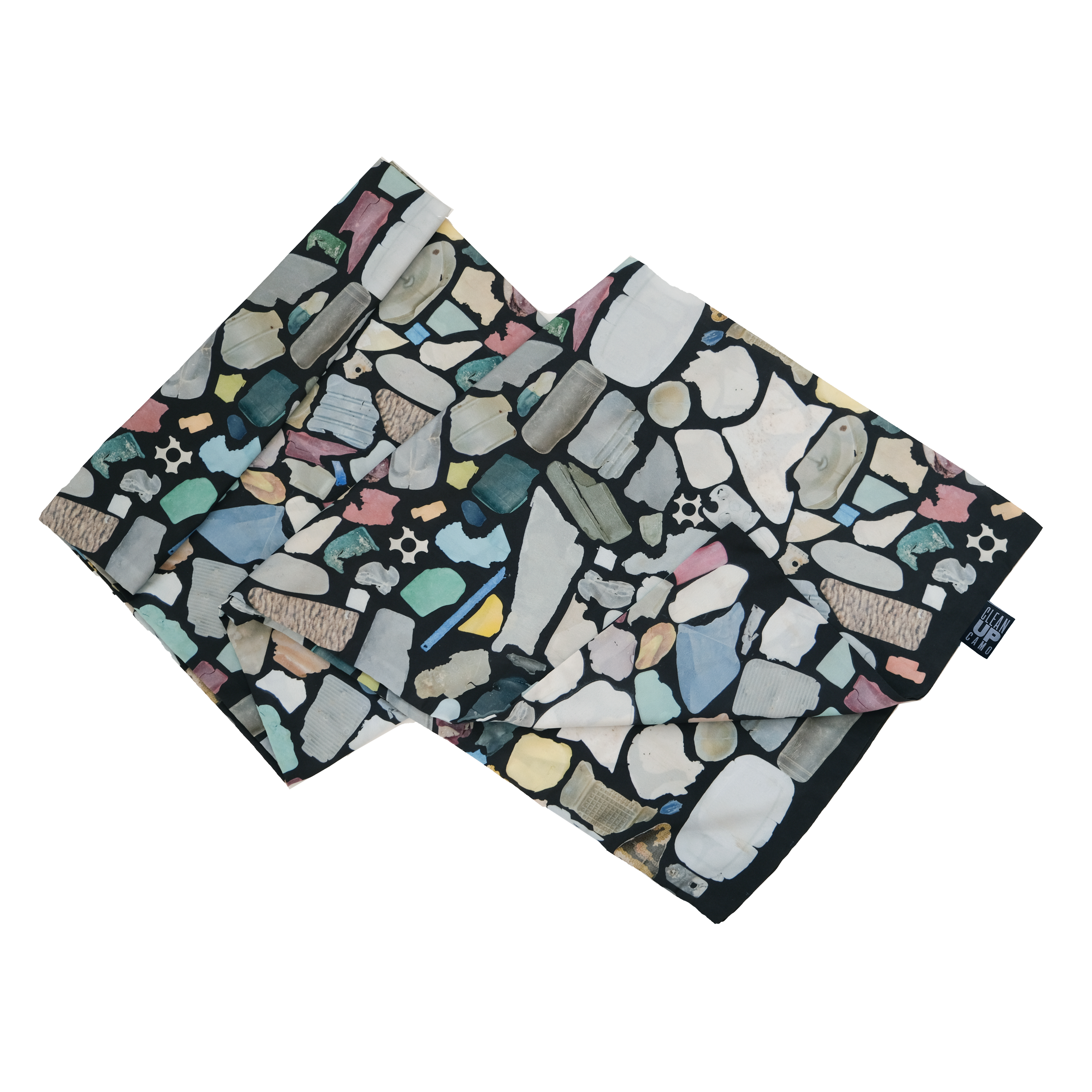
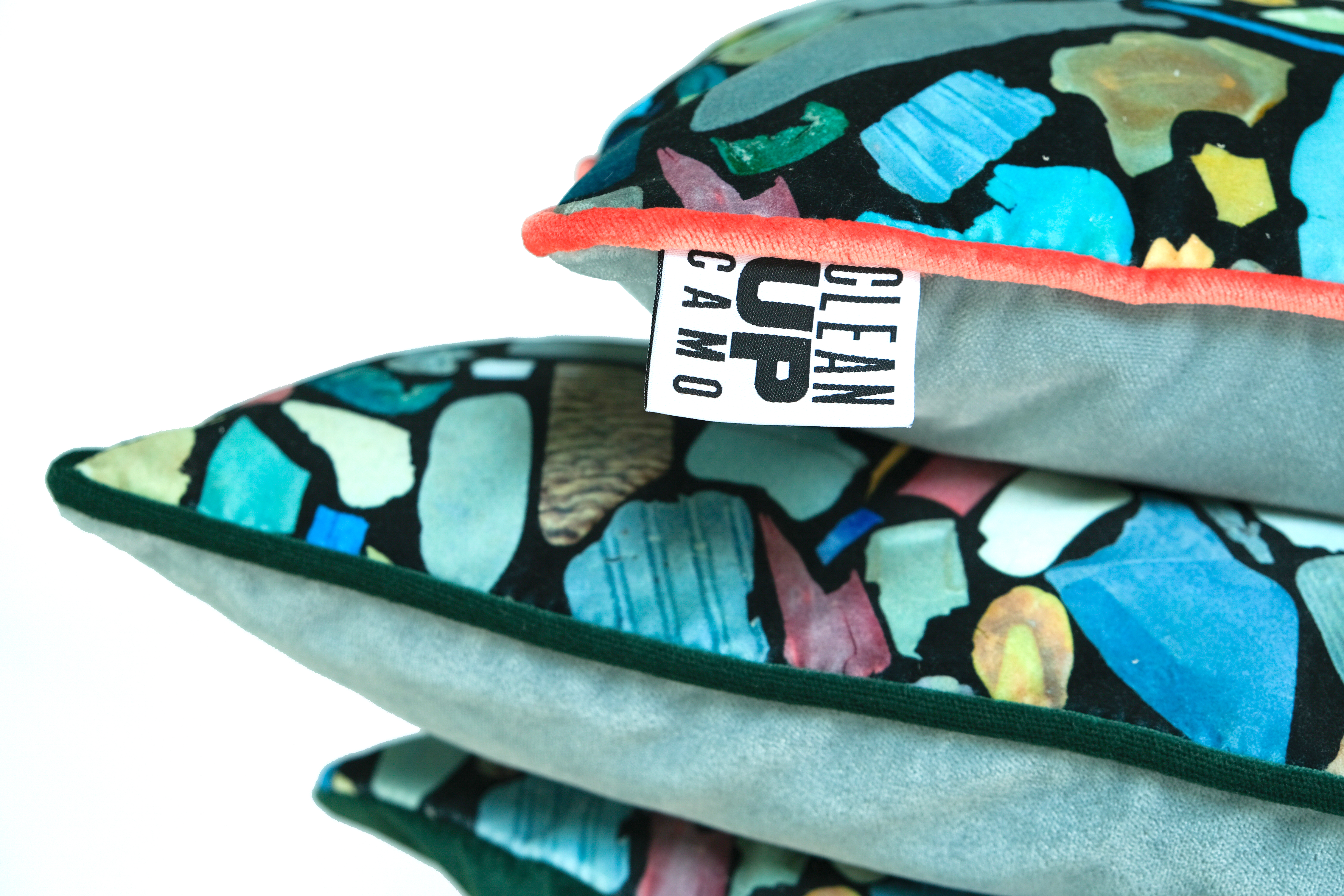
The products launched at the Design Museum’s Waste Age exhibition in 2012 you can buy these products on Ella’s website: https://elladorandesign.co.uk/clean-up-camo-collection/
 wasted talent